


Hello and welcome to the first edition of The Owner’s Memo.
The Owner’s Memo is a newsletter about investing, written for myself, so I have a place to record my thoughts, make sure they’re good and coherent, and to keep myself working constantly to become a better investor. If others find value in it, all the better. There’s nothing like writing to show me whether or not I understand something. I once had a physics professor who told our class, “If you cannot explain the concepts you learn to your grandmother, then you don’t really know them.” I hope this newsletter strikes that spirit and is a place to explore the craft of investing in a way free of pretension, with a goal of getting better and better, finding the best possible investment ideas out there, and continually learning how to manage myself in the course of buying, selling, and holding investments.
My focus will mainly be equity investing, and I’ll draw heavily on the teachings of Warren Buffett, Charlie Munger, and others. Most of all, I hope the writing and analysis I discuss here is grounded in ideas that make sense to me and you, rather than relying on accepted “wisdom” that doesn’t.
On keeping it simple
I’m fond of the idea, expressed by Buffett and others that often the reason for buying and owning an investment is simple enough to be written on a napkin. Professional investors often create extensive investment presentations that serve a secondary purpose: they seek to assure partners or others that the analyst has done a lot of work. Typically, much of the work is ancillary to the core investment thesis. I’ll seek to deliver analyses that both get to the point and examine risks to a balanced degree.
”If you cannot explain the concepts you learn to your grandmother, then you don’t really know them.”
- my former physics professor
On temperament
Controlling or understanding my emotions is critical for good investing. Buffett often likes to say that, for investing, temperament is more important than IQ. From the 2009 Berkshire Hathaway annual meeting:
The market is there to serve you rather than instruct you and to a great extent, that is not a matter of IQ. If you’re in the investment business and you have a IQ of 150, sell 30 points to somebody else, ’cause you don’t need it. I mean, it. You need to be reasonably intelligent. But you do not need to be a genius.
But you do have to have an emotional stability. You have to have sort of an inner peace about your decisions. Because it is a game where you get subjected to minute-by-minute stimuli, where people are offering opinions all the time. You have to be able to think for yourself.
I agree wholeheartedly with this idea, and I have a lot of experience with the notion myself. It seems to me that IQ and temperament are almost completely unrelated. We need enough smarts to understand financial statements, understand the difference between good analysis and bad, and to be able to pick up on positive and negative qualities of an investment, like how “good” the management team might be, but none of that requires a genius-level IQ.
Instead, I’ve found that the way I respond to market prices bears as much weight as good analysis:
Can I buy a cheap security without worrying about how much cheaper it was a month ago?
Can I hold it if the price declines but the prospects still look good?
Can I hold it for extended periods without being tempted by the latest hot stock?
Can I sell it when things go poorly without berating myself, when often, failures are only obvious in hindsight?
Can I sell it, if warranted, without berating myself for missing the top?
I plan to write quite a bit about the psychological aspects of investing, about my own temperament, my quest to know myself, and the neverending battle of forming my own theses and assessing them regularly, taking in outside information while avoiding outside noise.
On the rarity of great investments
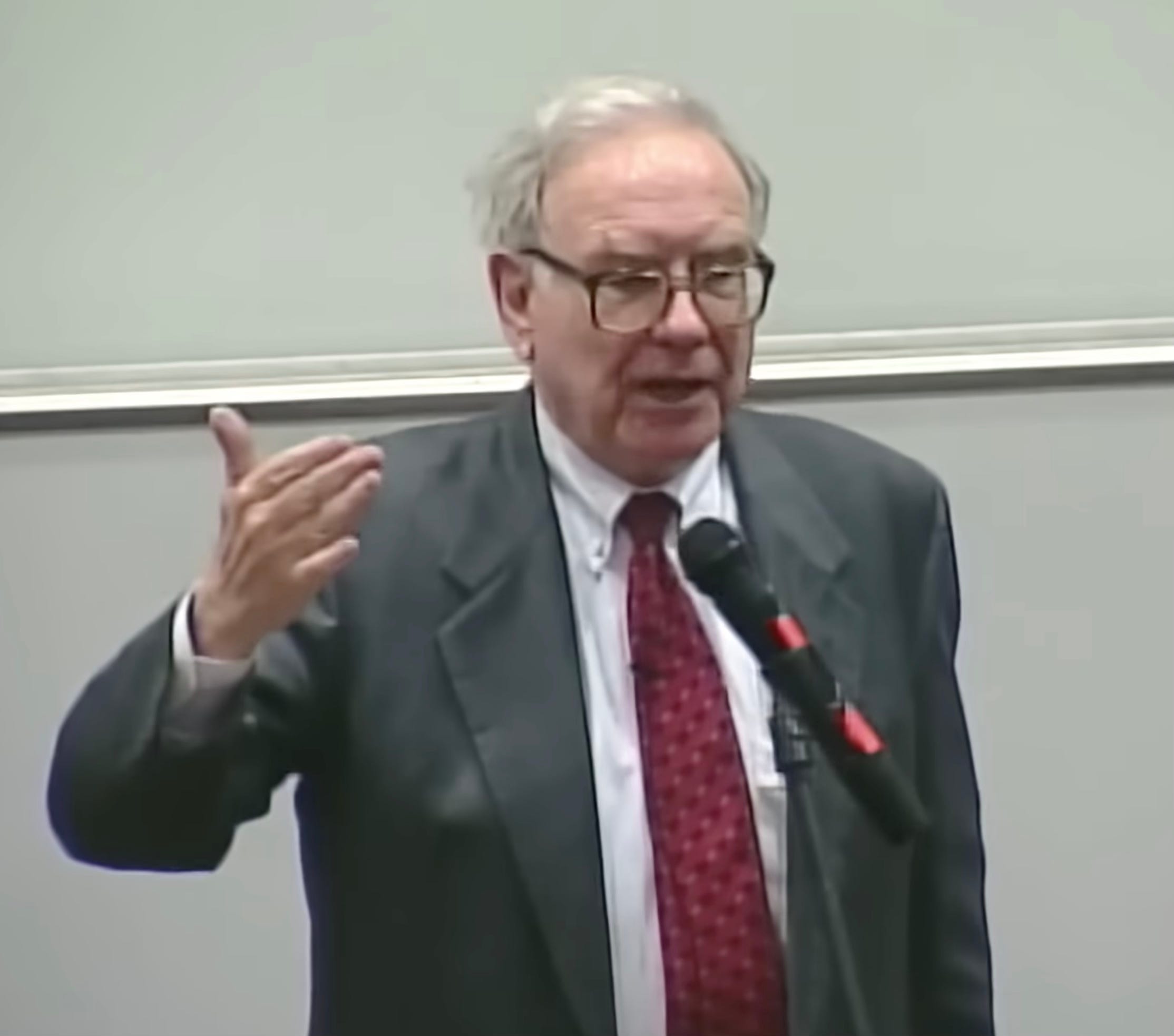
Great investments come along very rarely in life. Here is Buffett again in a speech to the Terry College of Business at the University of Georgia from 2001:
You would be better off if, when you got out of school here, you got a punch card with twenty punches on it and every [investment] decision you made, you used up a punch. You’d get very rich because you’d think through very hard each one.
There’s a temptation to dabble, particularly during bull markets… you can’t make any money doing that, but if you had a punch card with only twenty punches, and you weren’t going to get another one in your life, you would think a long time before every investment decision, and you would make good ones, and you’d make big ones, and you probably wouldn’t even use all twenty punches in your lifetime, but you wouldn’t need to.
I think the punch card idea is one investing idea that is impossible to overstate. Both professional and non-professional investors have a natural tendency to be hyperactive and to overinvest. Professionals often overinvest with diversification in mind. Diversification is a path to producing less volatile but more ordinary results, allowing the pro a better chance to accrue assets through the things they can control, marketing and salesmanship. For lay investors, ideas are often surfaced in ways that make them seem like great opportunities, for instance, reading an article about how fast a company is growing or getting a stock tip from a friend. However, the layman doesn’t have the experience to understand what separates good ideas like those that are all around from great investments. These ideas and tips don’t come along every day, but they do occur frequently enough to confuse the individual and severely impair results if the hyperactivity is not contained.
I seek to live the punch card philosophy in my own investing, and I’ll explore it and express it in my writing.
What you’ll find here
In The Owner’s Memo, you’ll find a few kinds of articles:
Case studies of great investments from the past. Great case studies can be the best way to learn great investing, but it is often difficult to find good ones. Case studies can be hard to reconstitute because past documents or data sources may not be around or may be tough to find. Since they’re often about success stories, sometimes they don’t give enough weight to just how hard it would have been to pull the trigger. But when they are written well, there is nothing like them. In learning about the features of great investments from the past, we can analogize to investments of today and understand what to avoid, the pitfalls or those potential investments that don’t rise to the level of top-notch.
Reviews of investment research, books, writings, and other discussions. Understanding the wide variety of investment work out there is vital to becoming a great investor. I review research articles and other sources to inform my own investment philosophy, both providing interesting ideas to examine and also bad ideas to avoid.
Current investment ideas or candidates. I may also write about businesses I find compelling and potential investment ideas, but I don’t plan to do this right away. First, I’ll see how readers respond to some of the above articles. I want to avoid any sense that this newsletter provides a drip feed of regular “hot stock” tips, which would contradict the idea that great investments are rare and that the goal is to own just a few of the very best investments one can find.
Profiles of great investors. In the same way that case studies can help learn about great investing features and habits, studying great investors can provide almost as much in the way of good lessons. They also have the benefit of providing inspiration. I’ll review what I can glean from the life and work of some of the greats, particularly focusing on how they started out, to gain some insight on what personality traits or behaviors might be important.
Reviews of other interesting work in adjacent areas. From time to time, I will be writing about topics that might not seem immediately to be relevant to investing. For example, I am likely to write about psychology and advances in artificial intelligence. Both of those can aid dramatically (and may even be necessary) in being the best investor I can be. I’ll always be expanding my circle of competence, too, and this will be a place to share that work. Charlie Munger felt that having a well-rounded intellect and a desire for lifelong learning was essential to being a great investor.
Current events. I do not intend to write much about current events, unless the events are applicable to becoming a better investor. I’ll seek to create a set of writing that is focused on the long term. I want this to be a place where I can put down my own theses, grow and thrive as an investor, and, hopefully, allow others to do the same in reading my work.
Buffett is one of a kind with many great philosophies. I had forgotten about the punch card.
The punch card idea is an old one, but still good. I find it interesting just how much of your writing here about investments (ostensibly pointed at financial investments), is just as applicable to life choices in a similar framework. In an even more finite way, our time is truly a "punch card" in that we only ever get one and are never sure how long we get.
And in the choice of where to spend our limited time, temperament is an even more invaluable characteristic in helping us allocate accordingly. And also, that so often people veer between too many different options instead of truly focusing on a more restrained set of important avenues.