



The Owner’s Memo is on vacation this week and next, so, in lieu of a regular article, I thought I would write briefly about three books I have enjoyed over the past many years. Two are business biographies and one is about some great investing case studies. Each of the books is excellent, and the biographies would make great reading for your own vacation.
Buffett: The Making of an American Capitalist by Roger Lowenstein
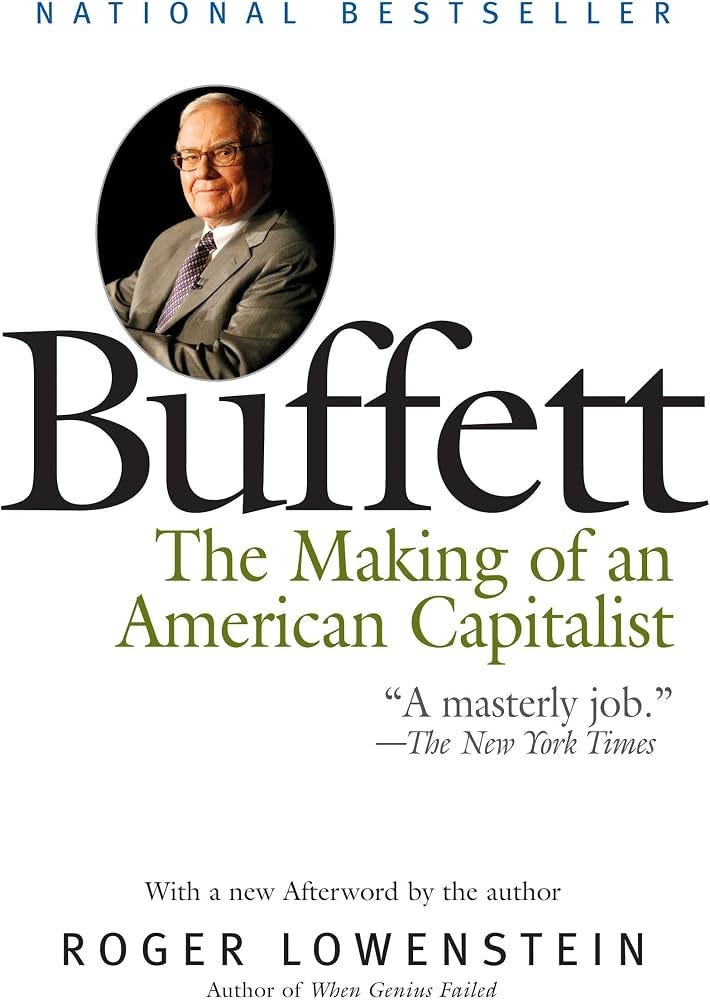
I first read this book perhaps fifteen years ago, and I was captivated. Roger Lowenstein is a fantastic writer, with seven books under his belt, and was a journalist for The Wall Street Journal and other financial publications. This book, arguably the one he is best known for, is the most readable and pithy biography of Warren Buffett for my money. (The Snowball by Alice Schroeder is easily the definitive biography of Buffett; it is massive, was written later, and is more complete than this one, but Lowenstein’s book is a more enjoyable read.)
Lowenstein takes the reader through Buffett’s life (up to the time of publication in 1995) and gives a real feel for the obsession and dedication with which Buffett conducted his work, and he does it while propelling the reader through the book. I could not put the book down when I first read it. Leafing through the pages now, I have a smile on my face.
Here is one passage about Buffett making a large investment in GEICO in 1976 that highlights how the book provides investment details while keeping the reader riveted.
Early in 1976, GEICO announced a staggering $126 million loss for the previous year. As recently as 1974, the stock had hit a high of 42. Now it was quoted at 4 7/8…
Within a month, Peck was booted out, and John J. Byrne, Jr., a forty-three-year-old veteran of Travelers, was tapped to succeed him. Byrne moved with exceptional
force…
Byrne showed up at the Graham mansion [to meet Buffett] in July, the night before a Post board meeting. GEICO’s stock was at 2. This once seemingly invincible company was on the brink of becoming the biggest failed insurer ever - in Buffett’s words, “the Titanic of the insurance world.”…
… as a wartime general, Buffett thought him a brilliant choice.
“I didn’t ask, ‘How long is it going to take, Jack?’ In the end, you can’t
predict. [But] Jack clearly understood the dimensions of the problem.
Somehow, Byrne would get it done. And if he did, the stock could prove to be a tremendous bargain - maybe even better than that… Buffett got up a few hours after Byrne left and called Ronald Gutman, his broker at Goldman Sachs. He bought 500,000 shares at 2 1/8 and left a standing order for shares “in the multimillions.”…
Byrne, meanwhile, got other insurers to agree to take the reinsurance - but only with a big “if.” As part of the deal, GEICO had to raise new capital… Buffett told [John Gutfreund of Salomon Brothers] that he’d be willing to take the entire allotment - and named his price… The offering turned out to be a hit… Within six months, GEICO rose to 8 1/8 - a quadrupling. That was only a faint indication of its potential. Over the next few years, Berkshire doubled its stake, making Buffett the controlling investor.
Today, of course, Berkshire Hathaway owns GEICO completely, and Lowenstein reveals the story of how that came to be with the fine detail that defines a great nonfiction writer.
The entire book is written like that.
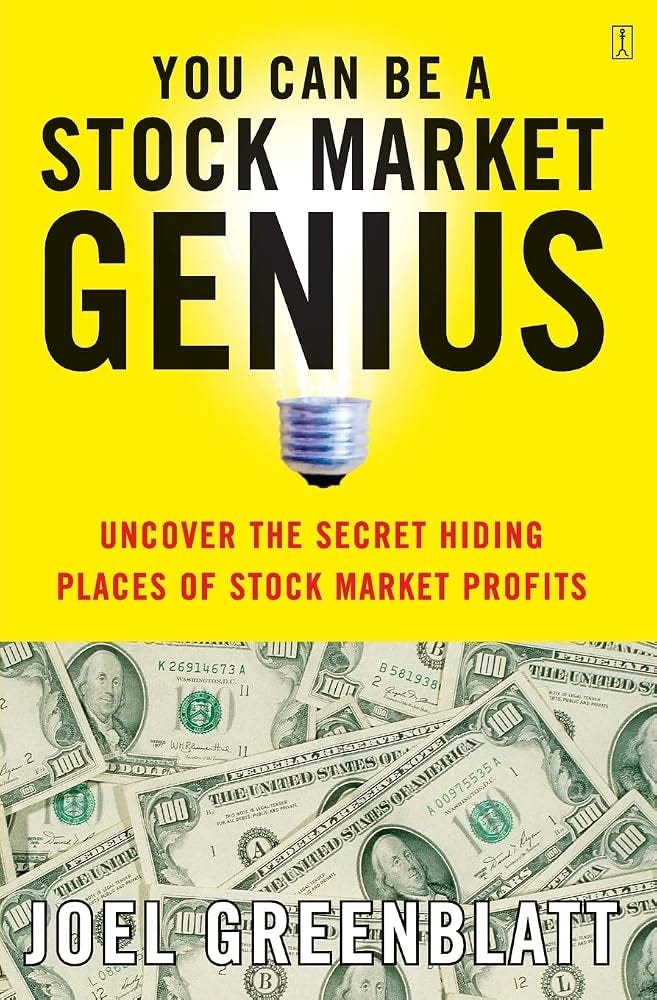
You Can Be a Stock Market Genius by Joel Greenblatt
Okay, this one is probably not beach reading and the title is notoriously bad, but it may be my favorite book about investing.
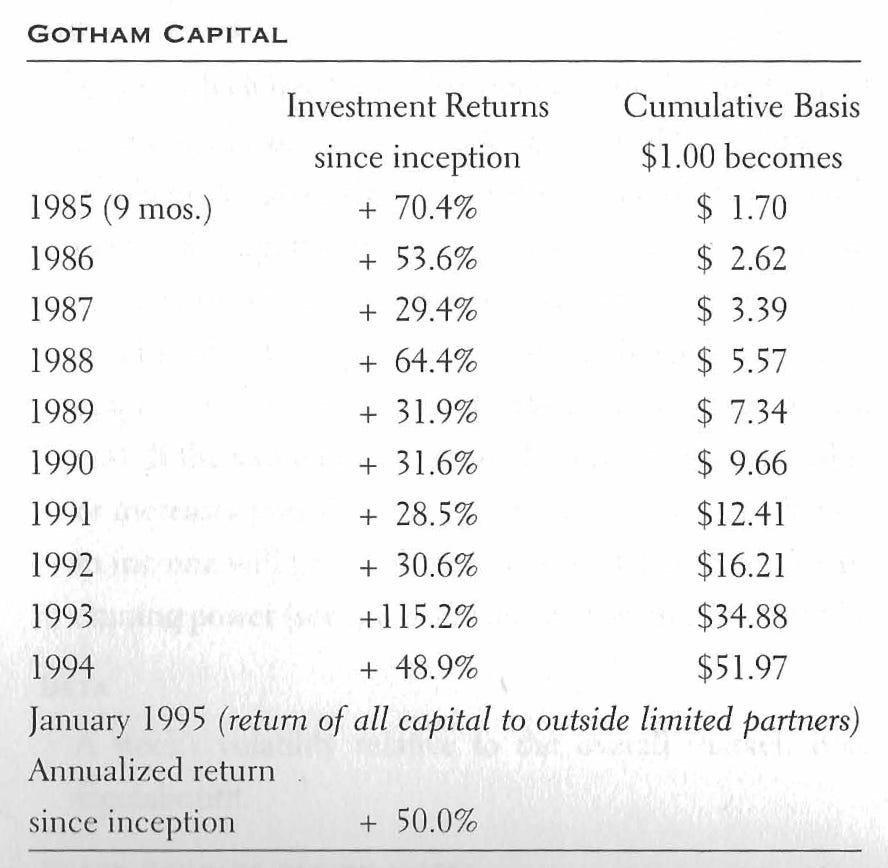
Joel Greenblatt is a hedge fund manager, author, and adjunct professor at Columbia Business School. He’s a great investor with the track record to prove it. In the back of YCBASMG (as this book is lovingly known), Greenblatt highlights the performance of his hedge fund, Gotham Capital, over the years 1985 to 1994, when he managed money for outside investors: the fund returned a stunning 50% per year before fees.
Greenblatt is also a talented professor; you can find some of his lectures from Columbia in online videos along with detailed notes from the classes. And he is also an excellent and entertaining writer. YCBASMG is filled with case studies from Greenblatt’s time running Gotham Capital. Two things make the book unique and satisfying.
First, the examples Greenblatt writes about are the types of investments most people never consider or study: company spinoffs, rights offerings, and restructurings to name a few. Second, he gives the reader enough detail to make them feel like they are understanding a subtle and complex situation. The reader feels that the work is not easy, but also like they could do it themselves. This is one of the first books that made me fall in love with investing. If you want to read some great investing case studies from a manager who walked the walk, this is the book.
The case studies are a little too deep to quote in brief, but here is a passage from the start of the book:
Stock-market profits can be hiding anywhere, and their hiding places are always changing. In fact, the underlying theme to most of these investment situations is change. Something out of the ordinary course of business is taking place that creates an investment opportunity. The list of corporate events that can result in big profits for you runs the gamut - spinoffs, mergers, restructurings, rights offerings, bankruptcies, liquidations, asset sales, distributions. And it’s not just the events themselves that can provide profits; each such event can produce a whole host of new securities with their own extraordinary investment potential.
The great thing is, there’s always something happening. Dozens of corporate events each week, too many for any one person to follow. But that’s the point: you can’t follow all of them, and you don’t have to. Even finding one good opportunity a month is far more than you should need or want. As you read through this book, in example after example, in lesson after lesson, you may wonder “How the hell could I have found that one?” or “I never would have figured that out!” Both are probably true. But there will be plenty of others that you do find and can figure out. Even after you learn where to look for new ideas, the notion that you can cover even one-tenth of these special corporate events is a pipe dream. On the other hand, making incredible profits over your lifetime from the ones you do work on, isn’t. The old cliché holds true: “Teach a man to fish…”
A Sportsman’s Life by Leigh Perkins
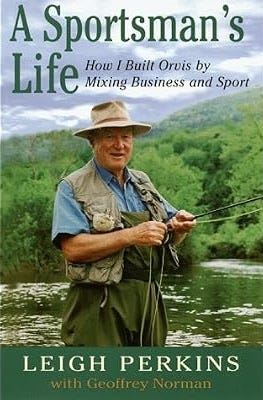
While the other two on this list may be already known by some readers, I bet this one won’t be. My father gave me the book about two years ago, and I tore through it.
Leigh Perkins owned the outdoor sporting goods retailer Orvis. Leigh didn’t found the company; he bought it from the prior owner, Duckie Corkran, in 1965. The book tells the story of Leigh’s life, from his early years as a boy through his retirement from Orvis, passing the business on to his son in 1992.
It’s a very easy read, with Leigh telling the story in an informal and conversational tone. (Kudos to the co-author Geoffrey Norman.) Leigh is straightforward and direct, admits his faults and failures easily, and leaves the reader with the conclusion that Orvis succeeded in large part due to his love of fishing, hunting, and the outdoors, his commonsense approach to understanding what the customer wanted, and his hardworking nature. Here he is explaining how he adapted the idea for a very successful product:
One day, we were at lunch and being served by… an attractive young woman named Mavis, who got quite flustered when I kept staring at her chest. What got my attention was this little retrievable reel with a pencil on it for taking orders. When she needed the pencil, she could pull the string out all the way and write the order down. When she was finished, the string was pulled back into this little cartridge by a spring-loaded device…
When you are standing in a trout stream, in water up to your waist, and you need to trim your leader, you use a small set of nippers. If you are nervous because the fish are rising and you want to hurry up… then you might very well fumble those nippers and drop them in the water. If you tie them to your vest with a length of line, then that line will inevitably blow around and get in the way when you least need that to happen. With a retractable device… the tool would always be there when you needed it.
Fly fishermen tumbled to the tool right away once we started offering it… We called it the Zinger, and we’ve sold millions of them.
Can you imagine a professional CEO who wasn’t into fly fishing in this way trying to compete with Leigh and Orvis?
A Sportsman’s Life is full of fun anecdotes like this and also deeper financial and business lessons.
I’ll leave you with one last passage from the book. Leigh was born into a wealthy family, but did not rely on his family’s wealth. (He purchased Orvis for $400,000, half of it borrowed and half of it his own money earned and saved by working as a salesman up to the age of 37.) Why didn’t he sit back and live a relaxed life?
While I could have become some kind of playboy… I was greatly influenced in this decision by my father…. He told me that he knew only a few men who did not work and were happy and that they were inevitably men of very high intelligence. He added that he didn’t think I qualified, and I didn’t argue with him.